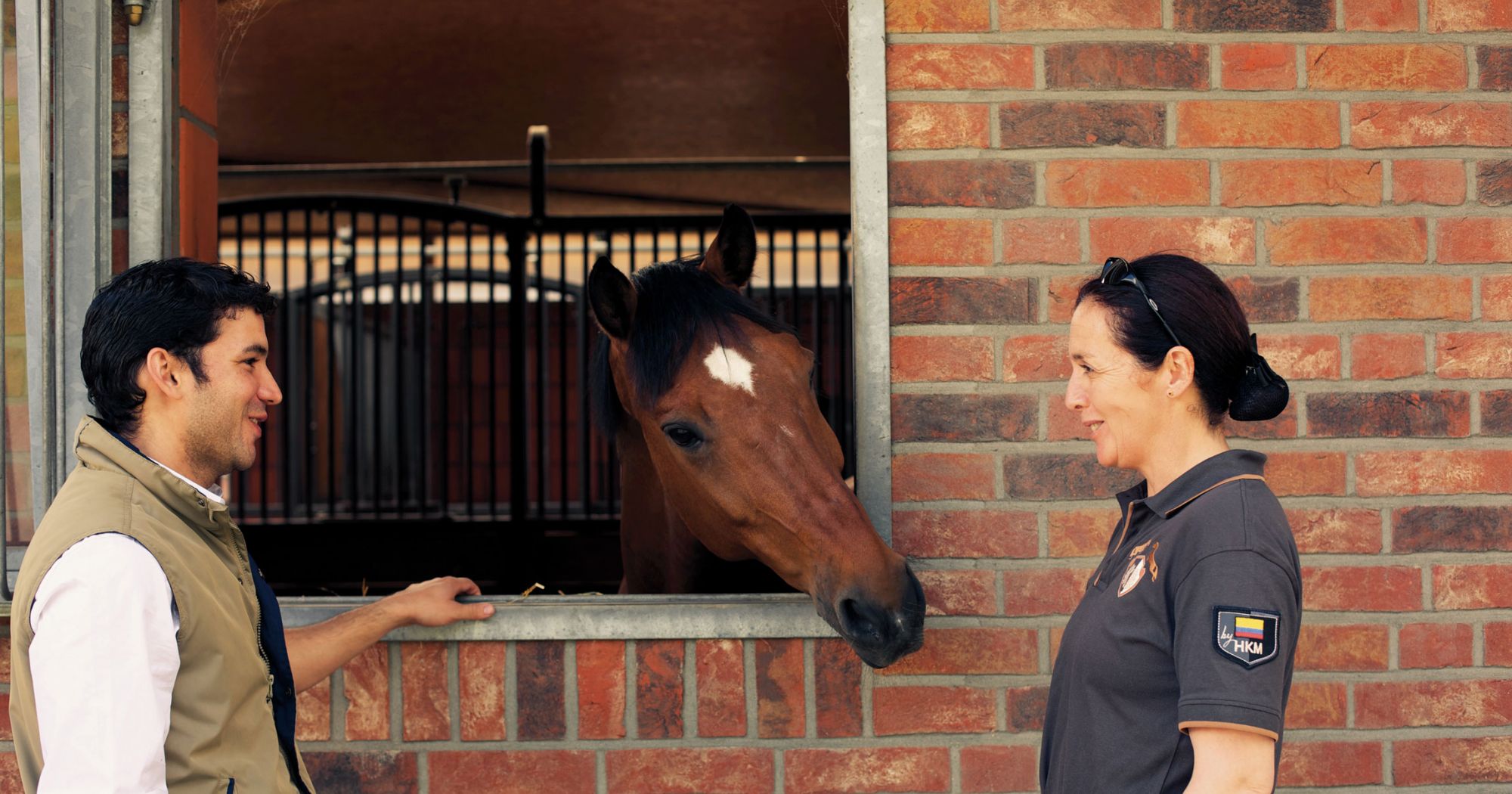
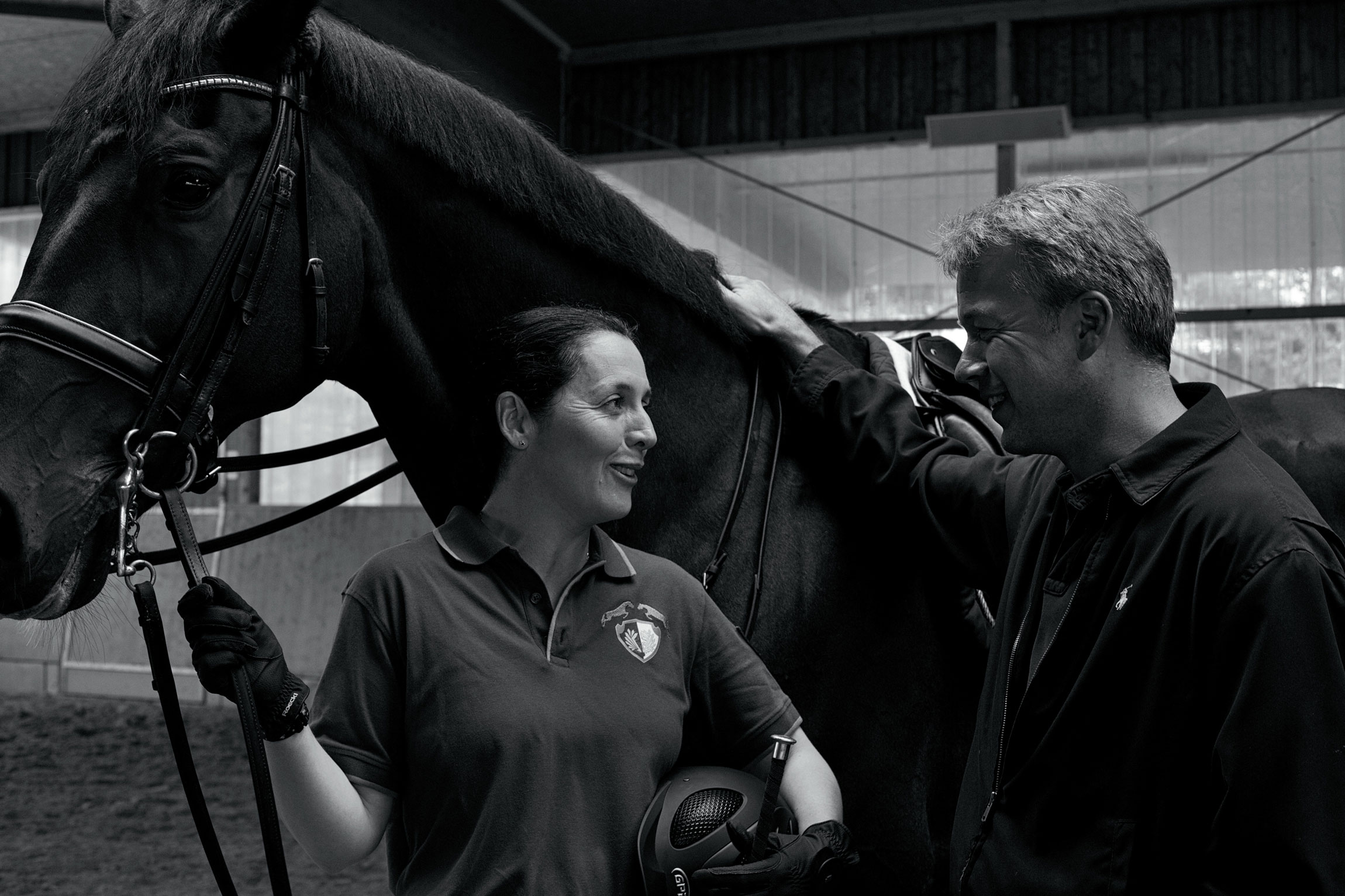
After their third-place finish, it was decided that Colombia should have an expert coach of their own, and so plans were put in place to send García to Germany on a six-month course to work once again with von Samson.
FEI Solidarity’s support through a scholarship for coaches allowed her to train in Europe as a coach with access to top facilities.
The course under von Samson, which eventually saw García stay in Germany for two years, provided her with a comprehensive knowledge of expert coaching techniques that would set her in good stead to lead coaching in Colombia.
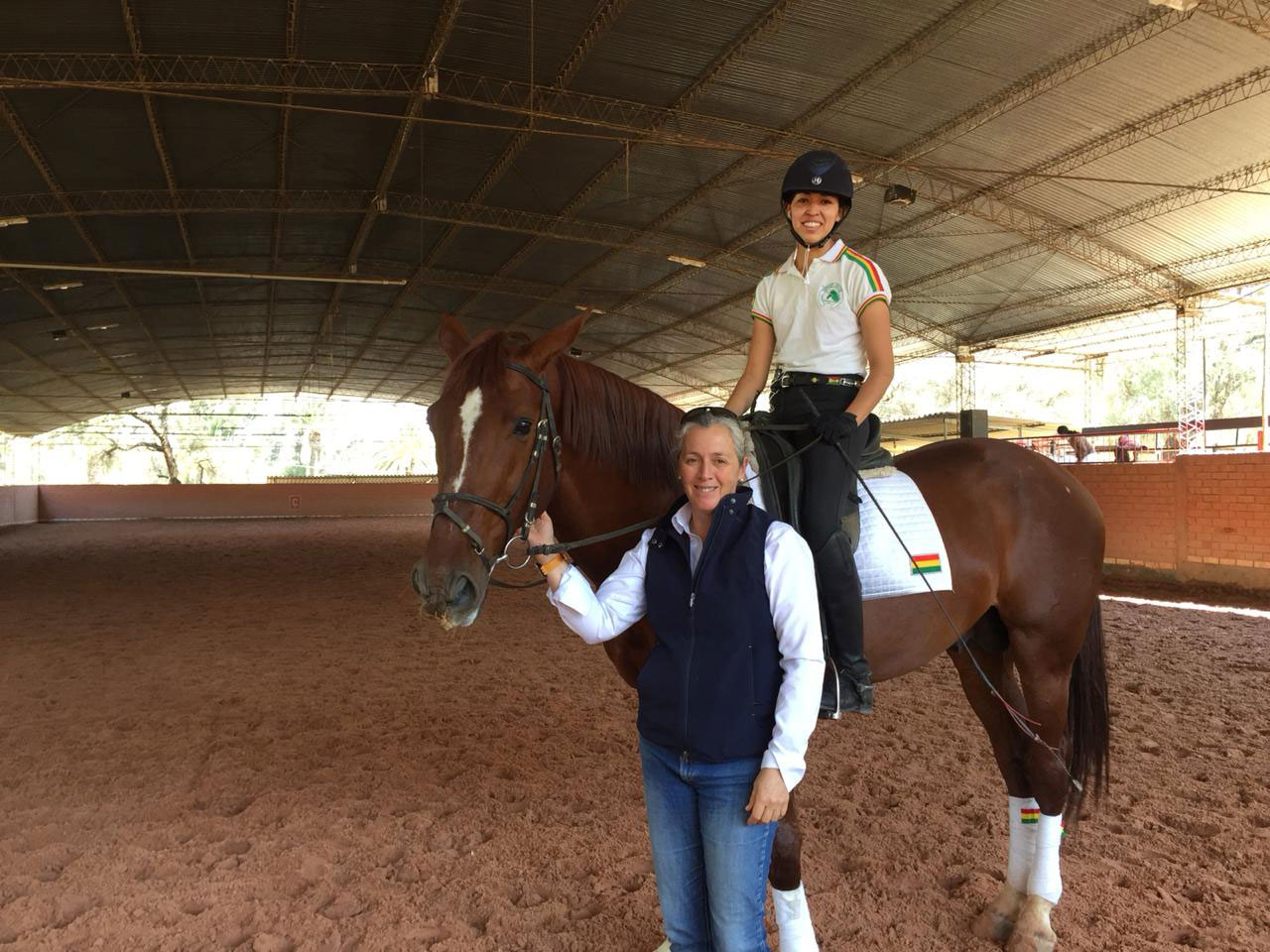
During this period, she was also able to attend prestigious European competitions as an athlete, such as the FEI World Equestrian Games™ 2014 in Caen, France.
Upon returning to Colombia with her newfound knowledge and the backing of FEI Solidarity, García played a key role in establishing a national coaching system, without which nations cannot properly develop the sport.
Garcia says:
“I’ve been supported by FEI Solidarity for a large part of my journey. They gave us the backing to work with the national federation to essentially create the national system for coaches in Colombia. This mainly covers coaches in riding schools, and with a certification process in place, it has allowed us to formalise the process a little. Once they have passed these early steps, they should be passed on to the more rigorous FEI ongoing Coach Education Programme.”
It was during this period that García was invited to Mexico by FEI Development Officer Jean-Philippe Camboulives to support him during a coaches’ workshop organised by PASO.
This marked her first experience working with coaches and judges in that capacity. Also in attendance was Mercedes Campderá, a judge whom García had met during her career as an athlete.
Taking the Path Less Travelled
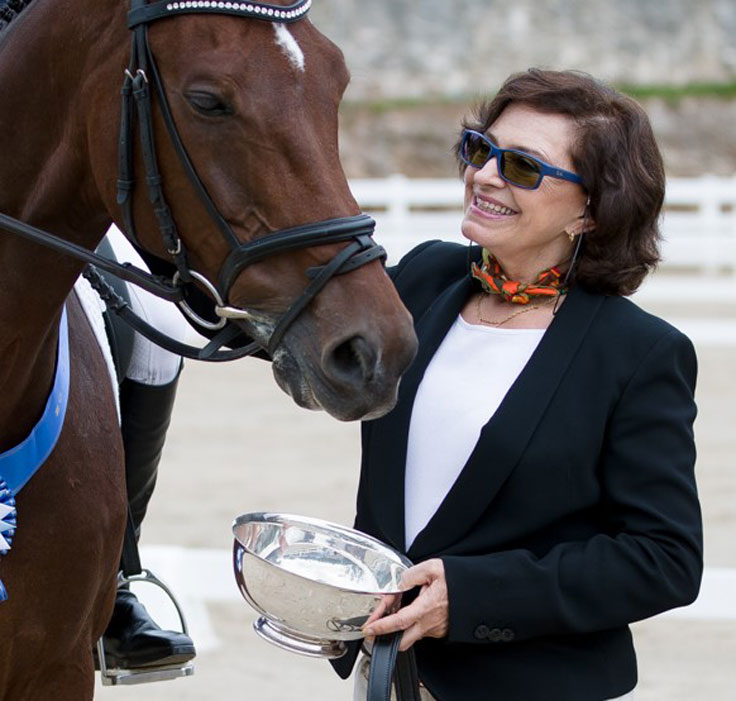
Campderá’s own career had, similarly to García, began as an athlete. She competed in national competitions in Mexico for around 17 years before she was given a tip that would put her on the path to eventually becoming a judge.
Campderá said: “I was competing consistently in show jumping for a long time when coach Gustaf Nyblaeus told me that I should introduce dressage into my routine as I did not yet have a mastery of the core skills.”
Of course, starting in an entirely new discipline is a difficult and daunting endeavour, but after some time, Campderá was able to find success across both show jumping and dressage. But this was only the beginning of her career diversification, as Nyblaeus returned with yet more sage advice.
She says:
“The coach had a very clear idea of how I could improve in dressage. He advised me to sit down with the judges and see what they really want from me. Sitting down with judges did not really appeal to me initially given my age, but I trusted my coach and did it anyway. As I listened to all of the things that I needed to do in my dressage career, I began liking it, and it certainly piqued my interest in judging a little.”
Her appreciation of judges grew over time and eventually she was encouraged to start judging herself. Alongside her riding career, Campderá would also spend time judging the lower classes of competition in Mexico.
Over time, she gained a fine reputation as a judge in her home country, and in 1996, she went up a level to become an FEI judge. Her path as a judge has, again, not been a straight one, but rather has diverged.
Initially starting out as a Dressage coach, her keen eye quickly saw her approached by the eventing federation who requested her help as an international judge.
Then, in 2008, Para Dressage began taking off in Mexico. Having attained FEI four star judge status, Campderá was asked to retrain yet again to help give the discipline a boost in its infant stage.
Balancing Your Passions
Though perfect for an interesting career, diversifying in such a manner and training in any capacity has a cost.
Changing discipline and passing exams to be properly certified can be an expensive affair for participants. Indeed, to finance her career, Campderá worked as an office executive and an equestrian magazine director among other positions while still competing as an athlete and training as a judge. Her big break came through FEI Solidarity.
She explains: “I would be riding all morning, and then I would work in the afternoon through to the night. I'd work and work, because financially you have to support yourself.
This continued until the FEI helped to introduce me into the European judging circuit through the FEI Dressage World Challenge.
Once they know you in Europe and can see the quality of your judging first-hand, you start getting invited back, but those first steps are extremely difficult coming from South America to judge important European competitions. From the very start it was the help from the FEI that was most important.”
Equestrian Sports Educative Events
Having already led a long, successful, and varied career, Campderá added yet another string to her bow in 2015 by beginning work with FEI Solidarity as an expert judge.
As part of the push to help developing national federations grow and become self-sustaining, FEI Solidarity founded the Equestrian Sports Educative Events (ESEEs).
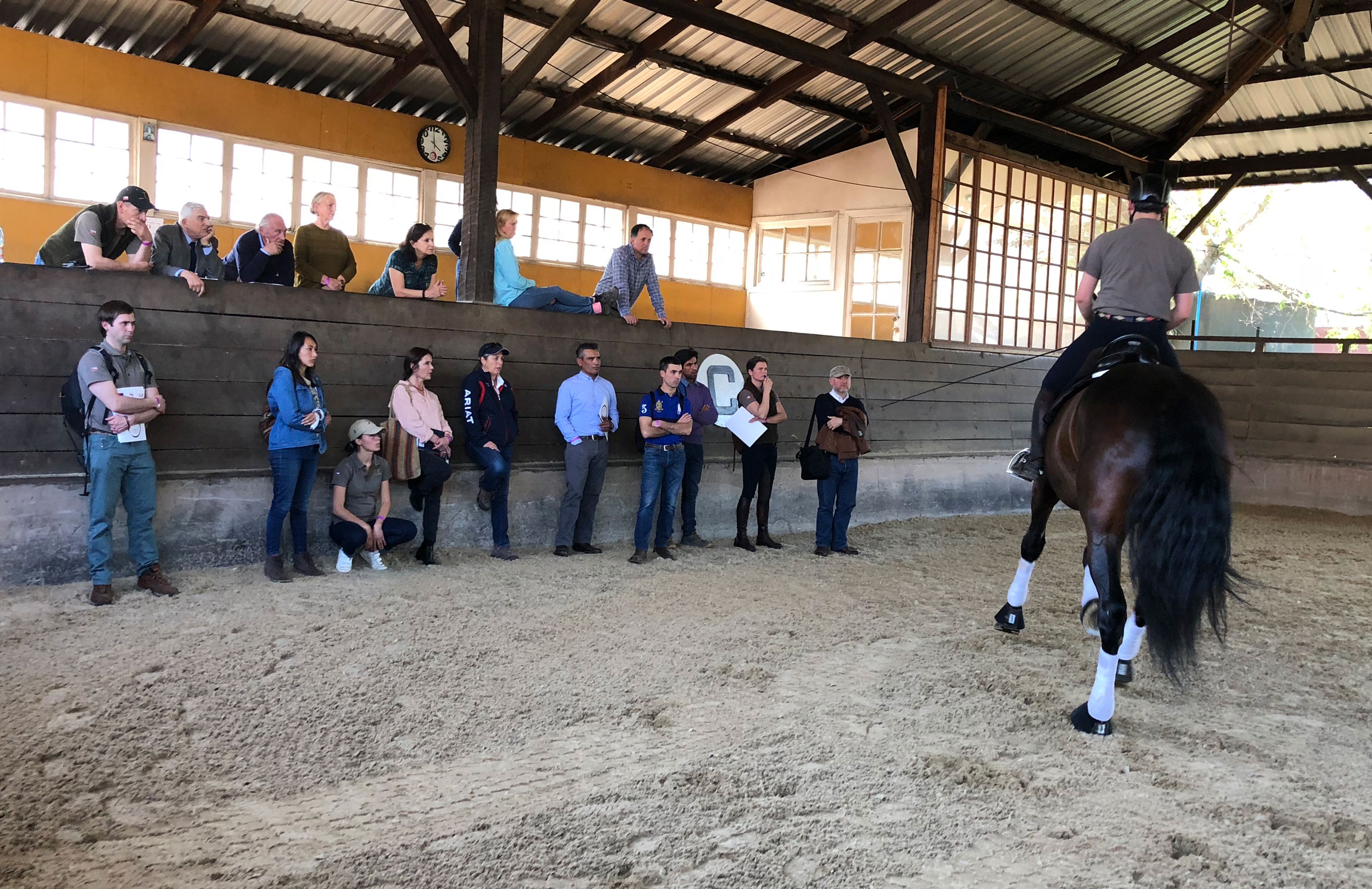
This education tool aimed at national officials, including judges and coaches, takes the form of a workshop delivered by two technical experts in their fields. In many cases in Latin America and the Carribean, those experts for dressage are García and Campderá.
“We had a pilot course in Chile with Jean-Phillipe with people from all over the country,” says Campderá. “We were mainly listening – shadow judging or shadow coaching – while Jean-Phillipe delivered the workshop and explained how to become what the FEI calls a ‘technical expert’. From there, FEI Solidarity started promoting ESEEs all over the world.”
The Equestrian Sport Educative Event (ESEE) is a tool to educate National Officials (judges, course designers, according to the discipline) including the national Coaches with their pupils, who are attending as well, in order to ensure technical coherence.
The ESEEs delivered in Latin America include Colombia, Mexico, Chile, Trinidad and Tobago, and El Salvador.
This has proved fundamental in terms of providing key information, but it also helps to nurture the link between the FEI and developing national federations, as well as the equestrian world as a whole. Of course, success of the ESEE relies heavily on the experts leading the course, and García and Campderá have developed a very rewarding partnership.
“Working together has been really easy for us,” says García. “Mercedes always challenges me and has really helped me improve.
"Between us, you have two different visions. One from the judge and the other from the coach. It gives national federations a really detailed and varied picture of how they can develop the discipline.”
This ESEE takes place over four days, and is split into two distinct sections. First, over three days, the technical experts deliver an education course both in the classroom and in a training arena, sharing FEI Solidarity’s key theories regarding how to develop national officials.
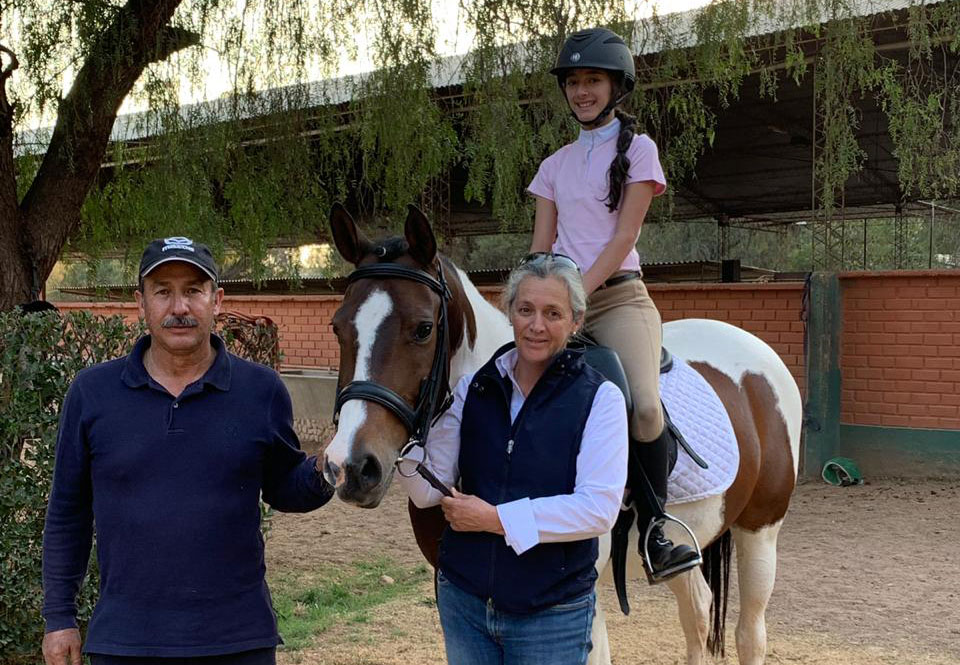
The final day seeks to consolidate the ideas circulated beforehand through a competition, with the participating officials assessed throughout to determine their capacity to both build and judge a competition.
Crucially for national federations which struggle financially to send their riders to compete internationally, the competition during the ESEE can be linked to the FEI Dressage World Challenge, allowing riders to compete on an international level within their own country. For García and Campderá, having received so much help throughout their careers from both friends and FEI Solidarity, the ESEE has given them both the opportunity to work in and give back to the sport they love so much.
“I think one of the best things you can do in life is to give back to your sport,” explains Campderá. “I have had very good teachers and tutors in my life, and for me to be able to mentor some the next generation, it's incredibly satisfying.”
“In every place FEI Solidarity goes it helps to develop the sport, and for us to be able to help with this is fantastic,” adds García.








 HEALTH & FITNESS
  TEACH ME
  HORSE & HUMAN
  MY EQUESTRIAN LIFE